Download Grundrisse: Foundations of the Critique of Political Economy (Penguin Classics), by Karl Marx
As a result of both bog comparison distinctions, we suppose you to begin loving reading books. Even those are the extremely basic publications; you will most likely need it at some point. The book that we gather here is additionally conceived the life to live better. The Grundrisse: Foundations Of The Critique Of Political Economy (Penguin Classics), By Karl Marx likewise provides you the awesome expertise of what you do not get in there instance. This is the tiny couple of component of the big offer checking out publications.
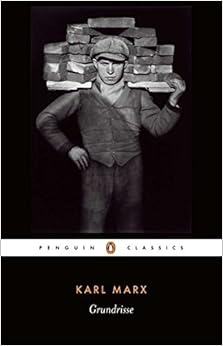
Grundrisse: Foundations of the Critique of Political Economy (Penguin Classics), by Karl Marx

Download Grundrisse: Foundations of the Critique of Political Economy (Penguin Classics), by Karl Marx
Collection as well as publication shop are 2 vital areas to get guides to check out. However, in modern era, it will certainly not only evoke the two places. Several websites are currently available for the on-line library. As right here, discovering the thousands of books titles from within and also beyond this nation is simple. You may not only intend to take the book however also casual education and learning. As revealed, collection can be a casual education and learning system to expand the understanding, from any type of resources.
The Grundrisse: Foundations Of The Critique Of Political Economy (Penguin Classics), By Karl Marx that we offer you will be ultimate to provide preference. This reading publication is your selected publication to accompany you when in your leisure time, in your lonely. This sort of publication can help you to recover the lonesome as well as obtain or add the motivations to be much more defective. Yeah, publication as the widow of the globe can be very inspiring manners. As here, this publication is likewise produced by a motivating writer that could make impacts of you to do more.
One to be reason of why you need to pick this book can be acquired when you're beginning. Furthermore, when completing this book, you could feel various life. What sort of distinction? It will certainly additionally rely on your selection to alter your life. However, actually this Grundrisse: Foundations Of The Critique Of Political Economy (Penguin Classics), By Karl Marx come to be some of the most wanted publication worldwide. It provides you not just experience however also the brand-new understanding.
When you have actually made a decision that this is also your favorite book, you should examine and also get Grundrisse: Foundations Of The Critique Of Political Economy (Penguin Classics), By Karl Marx sooner. Be the firstly people as well as join with them to delight in the information relevant about. To obtain even more recommendation, we will show you the link to get and also download the book. Also Grundrisse: Foundations Of The Critique Of Political Economy (Penguin Classics), By Karl Marx that we serve in this web site is type of soft data book; it doesn't suggest that the content will certainly be minimized. It's still to be the one that will influence you.
About the Author
Karl Marx was born in 1818 in Trier, Germany and studied in Bonn and Berlin. Influenced by Hegel, he later reacted against idealist philosophy and began to develop his own theory of historical materialism. He related the state of society to its economic foundations and mode of production, and recommended armed revolution on the part of the proletariat. Together with Engels, who he met in Paris, he wrote the Manifesto of the Communist Party. He lived in England as a refugee until his death in 1888, after participating in an unsuccessful revolution in Germany. Ernst Mandel was a member of the Belgian TUV from 1954 to 1963 and was chosen for the annual Alfred Marshall Lectures by Cambridge University in 1978. He died in 1995 and the Guardian described him as 'one of the most creative and independent-minded revolutionary Marxist thinkers of the post-war world.'
Read more
Product details
Series: Penguin Classics
Paperback: 912 pages
Publisher: Penguin Classics; Reprint edition (November 7, 1993)
Language: English
ISBN-10: 0140445757
ISBN-13: 978-0140445756
Product Dimensions:
5.1 x 1.7 x 7.8 inches
Shipping Weight: 1.4 pounds (View shipping rates and policies)
Average Customer Review:
4.3 out of 5 stars
15 customer reviews
Amazon Best Sellers Rank:
#86,014 in Books (See Top 100 in Books)
Read this Title years ago, though it would be good to re-read.
Excellent quality
Cdfecd
This book helps set the tone for later ideas expressed in Marx's more popular work. Don't just read what other have to say about Marx's work, read it firsthand. this is a perfect start.
I think it is the fault of customs office of Turkey but amazon should consider sending books in a way that even though customs offices open the package, they will not able to damage the books.
Because that's what you're doing. Reading Marx's unedited notebooks. You can understand his thought process, but know also that it is frequently roundabout, repetitive, and unclear.
The Grundrisse was largely unavailable until the late 1960s. It provoked something of a rediscovery of Marx-- along with the publication of the 1844 manuscripts-- in the late 1950s and early 1960s. The Grundrisse revealed a smoother transition between the early and later Marx than critics like Louis Althusser and others imagined. In particular, in spite of its rough form, the Grundrisse offers much more nuance to core Marxist concepts than many of his finished texts. Its opening salvo problematizes any clear division between production and consumption. Although feminist critics are correct in observing that Marx typically often under-analyzed unwaged labor, the Grundrisse draws these other forms of labor in relationship to the circuits of capital. For example, he writes, "Consumption is also immediate production . . . This is also true of every kind of consumption which in one way or another produces human beings in some particular aspect. Consumptive production." Housework could clearly apply within such an observation, which is exactly what Italian feminists began to analyze during the 1970s.Much like Gramsci's prison notebooks, the Grundrisse offers much less of a well-systematized argument than a problematic towards understanding the processes of capitalism and the vitality of living labour. Disjointed in many parts, the Grundrisse opens itself up to multiple interpretations.Perhaps most importantly, the Grundrisse draws attention back to class struggle in ways that Das Kapital minimizes. Marx heeds particular close attention to the alienating conditions produced not by capitalism but by laborers themselves. Capital merely extracts surplus value from living labor, but it masquerades itself as the originator of its own profits. Marx writes, "The worker produces the conditions of necessary labour as conditions belonging to capital; but also the value-creating possibility, the realization which lies as a possibility within him, now likewise exists as surplus value, surplus product, in a word as capital, as master over living labour capacity, as value endowed with its own might and will, confronting him in his abstract, objectless, purely subjective poverty. He has produced not only the alien wealth and his own poverty, but also the relation of this wealth as independent, self-sufficient wealth, relative to himself as the poverty which this wealth consumes, and from which wealth thereby draws new vital spirits unto itself, and realizes itself anew" (453). The vampiric image of capital manifests itself fully in the aforementioned passage. Furthermore, it suggests that laborer has a certain power over capitalism in refusing to allow its living labor be extracted by it.The Italian Autonomists made a lot of Marx's famous fragment on machines section within the Grundrisse. A particularly astute reading is found within Antonio Negri's *Marx Beyond Marx*. This section is where Marx imagines production extending from mere wage labor into the general intellect, abstract knowledge. It is a world no longer defined by necessary labor time, but instead where free time reigns and is constantly harnesses by capital in the search for surplus-value. He writes how capital "on the one side, [wants] to create disposable time, on the other, to convert it into surplus labour" (708). He asserts "general social knowledge has become a direct force of production, and to what degree, hence, the conditions of the process of social life itself have come under the control of the general intellect and been transformed in accordance with it." The General Intellect siphons off the surplus-value of social life, free time. One needs only to reflect on the ways in which social networking sites like twitter or facebook (or amazon reviews even) operate from harnessing the living labor of people's free time to operate and generate their valorization.And hence the rub of how we are both subsumed and negotiating such dialectal twists where capital attempts to valorize our activity, but our activity always exceeds the bounds of capitalism, too, forcing it to reroute itself and respond to our actions. For Marx, the first step that needs to occur is recognition of us being the sources of our alienating conditions, recognizing their historical contingency and uncertainty rather than their seeming transhistorical presence. Marx writes, "The recognition of the products as its own, and the judgment that its separation from the conditions of its realization is improper-- forcibly imposed-- is an enormous [advance in] awareness, itself the product of the mode of production resting on capital, and as much the knell to its doom as, with the slave's awareness that he cannot be the property of another" (463).Of course, like any notebooks, there is a lot of gibberish, too. One doesn't so much read the Grundrisse as navigate it. It clearly should not be one's first foray into Marx. And it is strongly recommended that one reads Das Kapital, Vol 1 and the 1844 manuscripts first to see how the Grundrisse serves as a pivot between the two texts. But it is essential reading for anyone who truly wants to understand Marxist thought and delve into some of the nuance that none of his other texts possess.
Karl Marx (1818-1888) wrote Grundrisse ("Outlines"; the full title is "Outlines of the Critique of Political Economy") in 1857-1858; it was a series of seven notebooks, which he apparently used (according to this edition's Foreword) "chiefly for purposes of self-clarification." But the manuscript was lost, and was not fully published until 1953. The editor notes in his helpful Foreword that Marx's 1859 Contribution to the Critique of Political Economy is "chiefly a re-draft of the first Grundrisse chapter." (Pg. 24)Marx posits the fundamental question as, "Can the existing relations of production and the relations of distribution which correspond to them be revolutionized by a change in the instrument of circulation, in the organization of circulation? ... Can such a transformation of circulation be undertaken without touching the existing relations of production and the social relations which rest on them?" (Pg. 122)He states that the value of all commodities is determined by "the labour time required to produce them." (Pg. 136-137)He argues that slavery is "incompatible with the development of bourgeois society and disappears with it." (Pg. 224) He states that the "relation of domination" by which wealth confronts forced labour "can never therefore create general indstriousness." (Pg. 326)He observes that the capitalist "obtains two things free of charge, first the surplus labour which increases the value of his capital... secondly, the quality of living labour which maintains the previous labour." (Pg. 365) For Marx, wage labour always consists of "paid and unpaid labour." (Pg. 574)Profit is defined as nothing but the sum of the surplus value expressed as a proportion of the total value of the capital. (Pg. 767) He comments that "Capital itself becomes a commodity," which varies in price according to demand and supply. (Pg. 851)For anyone interested in Marx's economic theories, this is an important book.
Grundrisse: Foundations of the Critique of Political Economy (Penguin Classics), by Karl Marx PDF
Grundrisse: Foundations of the Critique of Political Economy (Penguin Classics), by Karl Marx EPub
Grundrisse: Foundations of the Critique of Political Economy (Penguin Classics), by Karl Marx Doc
Grundrisse: Foundations of the Critique of Political Economy (Penguin Classics), by Karl Marx iBooks
Grundrisse: Foundations of the Critique of Political Economy (Penguin Classics), by Karl Marx rtf
Grundrisse: Foundations of the Critique of Political Economy (Penguin Classics), by Karl Marx Mobipocket
Grundrisse: Foundations of the Critique of Political Economy (Penguin Classics), by Karl Marx Kindle
0 komentar:
Posting Komentar